Many job orientations start in a lobby or a conference room. This one began at the scars left by a dam and wound its way to the mouth of a great river.
January 20, 2026
Sixteen emerging environmental professionals – of different backgrounds, but together undertaking a new chapter in their careers – gathered for lunch on the pebbly shore, waves lapping near where the Elwha empties itself into the Strait of Juan de Fuca, on the Olympic Peninsula. Their tour of the river was being led by Vanessa Castle of the Lower Elwha Klallam Tribe. Throughout the day, Castle had spoken to the group about the history of the Elwha. Once the site of the largest dam removal in U.S. history, the Elwha is a modern paragon of ecosystem restoration complicated by the dam’s historical and ongoing impacts on Castle’s Tribe. The hope was that providing this context would broaden the group’s understanding of restoration and resilience work: as work not confined just to the realms of science and policy, but with outcomes resonating into social and cultural landscapes and beyond.
Such an experience would make a meaningful memory in any environmental-focused career. But it was only day one of a new week-long professional development opportunity designed through a partnership between the UW Climate Impacts Group and Washington Sea Grant. The pilot of this “learning institute” served as an orientation for students participating in Washington Sea Grant, King County, Washington Department of Ecology and NOAA Coastal Management fellowships, providing community building and in-depth, place-based learning about multiple dimensions of climate and resilience.
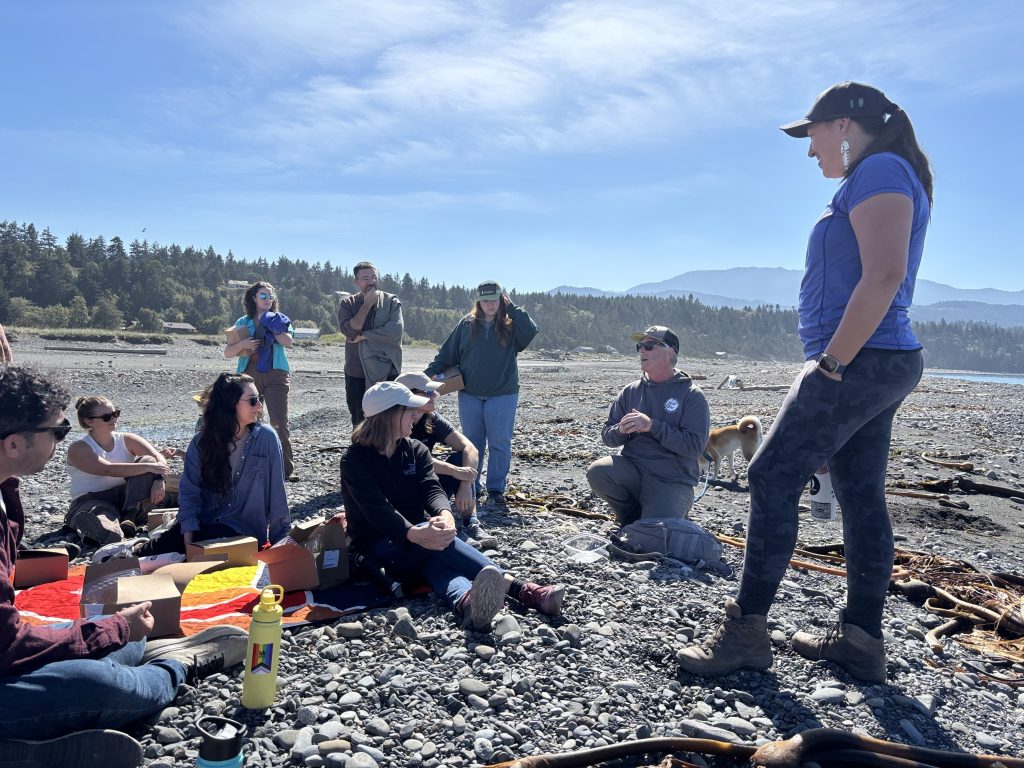
Vanessa Castle of the Lower Elwha Klallam Tribe led institute participants on a tour and history of the Elwha River. Photo by Katie Boyd
Expanding learning opportunities through partnership
The partnership between Climate Impacts Group and Washington Sea Grant led to the success of the inaugural learning institute. Climate Impacts Group brought their experience providing in-depth learning opportunities: In 2024, Climate Impacts Group hosted “Summer School,” a two-week program for Seattle-based, climate-focused graduate students.
When the Summer School was established, Lead Scientist Rishi Sugla and the Climate Impacts Group team had an ambitious vision to continue to grow the program. “We wanted to continue offering learning experiences for people who were really eager to learn about important topics such as how climate and environmental work intersect with different cultures and societies,” Sugla says.
One possible audience that could benefit from this type of experience was post-graduate environmental professionals: a cohort that Washington Sea Grant has a long track record of supporting through its various fellowship programs.
Sugla engaged with Katie Boyd, education and evaluation specialist for the Climate Impacts Group, and Becky Bronstein, resilience fellowship specialist at Washington Sea Grant. Working together, Climate Impacts Group and Washington Sea Grant received funding through the NOAA Climate Resilience Regional Challenge to modify Summer School for people embarking on various Washington state fellowship programs, including fellows from the new Washington Sea Grant Coastal Resilience Fellowship program (which was also funded through the NOAA Regional Challenge).
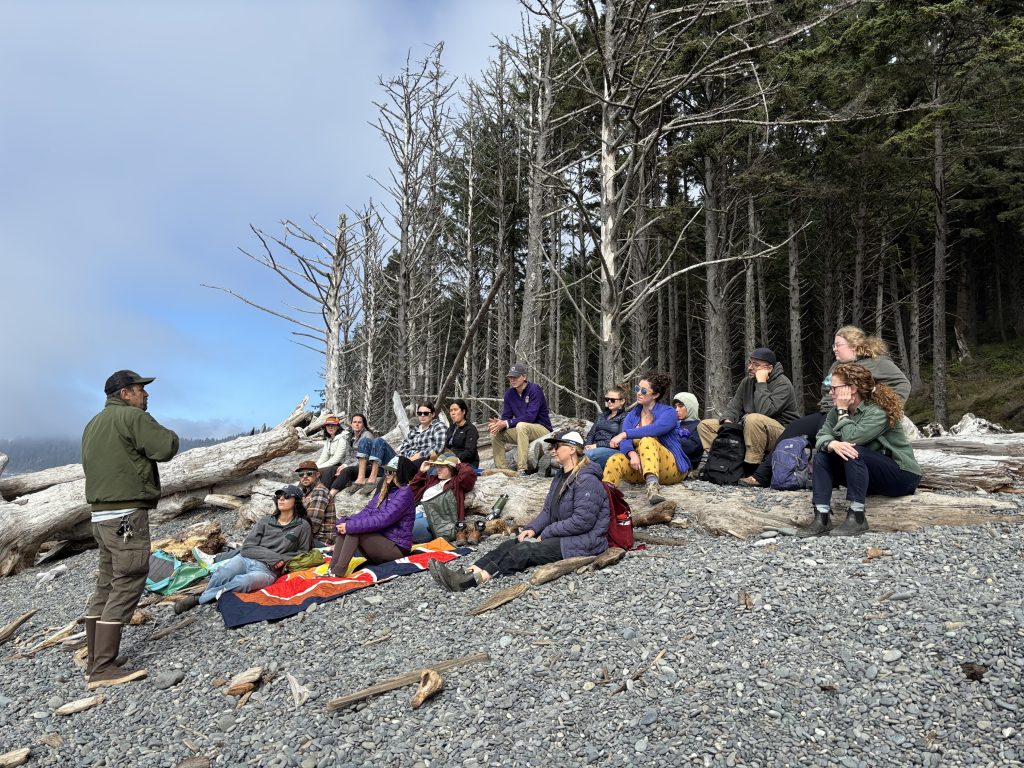
The learning institute prioritized in-person, place-based learning and experiences, like this outing to Rialto Beach led by Dr. Steve Fradkin of the National Park Service. Photo by Katie Boyd
A profound, place-based experience
With UW’s Olympic Natural Resource Center in Forks as a home base, the fellows set out almost every day to a talk or workshop in a field setting, from the Hoh Tribe’s upland relocation site and community garden to Rialto Beach.
“The program was even more place-based as a result of our collaboration,” Sugla explains. “We were able to build off of Washington Sea Grant’s connections to the Olympic Peninsula and the Hoh Reservation. Some of the most impactful experiences for fellows were a result of the collaboration with Washington Sea Grant.”
Fellows found the place-based aspects of the program to be some of the most impactful. “Being able to visit so many sites in person and experience the coastal hazards or environmental changes happening and their impacts was so valuable,” says Emma Van Orsow, a coastal resilience fellow. “It’s going to be something I bring back with me to remember why we’re in this field and why we’re doing this in the first place.”
When not in the field, the fellows reflected on their experiences or engaged in team-building activities. This way, they could launch into their fellowships not only with important context and lessons in climate and coastal resilience, but with a cohort of peers who shared their experiences – and whom they already knew and felt connected to.
“Getting to know each other, who all was going to be living nearby, and forming that small fellow community was really exciting,” says Anabel Baker, a Washington Sea Grant coastal resilience fellow.
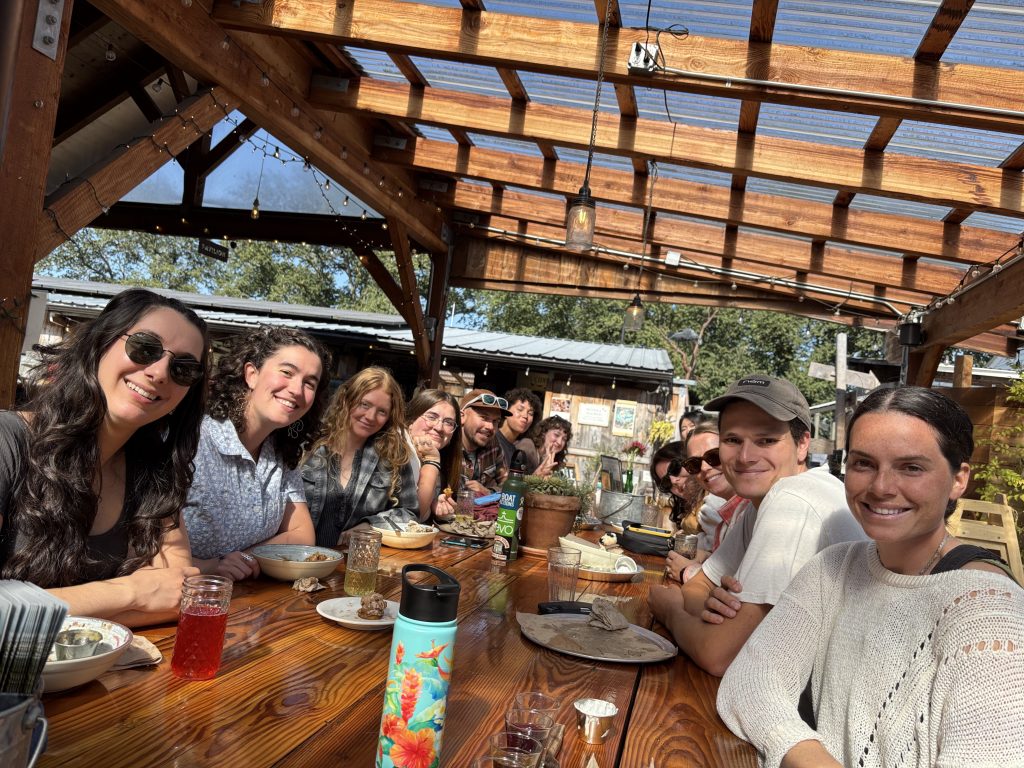
A week of learning was capped off with a visit to Finnriver Farm & Cidery in Chimacum, Washington. Photo by Katie Boyd
What’s next: Growing the program
The pilot learning institute was a success. Bronstein says the program met Washington Sea Grant’s three goals of providing the fellows with an orientation, laying a foundation of knowledge relevant to their work, and building camaraderie. Pre- and post-fellowship surveys show that the fellows’ understanding of multiple dimensions of resilience-related work increased after engaging in the program.
“The learning outcomes were surprisingly pronounced,” Sugla says. “You don’t often see a program where the before and after shifts are so significant.”
Based on the success of this year’s program, Washington Sea Grant and the Climate Impacts Group plan to continue the learning institute as a joint effort in future years. Washington Sea Grant is also considering more closely integrating some aspects of the learning institute into its Resilience Fellowship. “We see opportunities for more professional development to highlight lessons from the learning institute throughout our fellowships,” Bronstein says. “We’re also looking into ways our fellowship hosts could participate in the institute.”
Ultimately, the learning institute also strengthened connections between the Climate Impacts Group and Washington Sea Grant. “We have pretty different missions in some ways,” Sugla says, “but our shared focus on working with communities came together really nicely in this program. And to have a team of people who believe in supporting emerging professionals – it was great to be surrounded by that.”
###
Washington Sea Grant, based at the University of Washington, helps people and marine life thrive through research, technical expertise and education supporting the responsible use and conservation of coastal ecosystems. Washington Sea Grant is one of 34 Sea Grant programs supported by the National Oceanic and Atmospheric Administration in coastal and Great Lakes states that encourage the wise stewardship of our marine resources through research, education, outreach and technology transfer.
Join the conversation: instagram.com/waseagrant and Facebook.com/WaSeaGrant.
JAN
2026