JAN
Hazards and Resilience and Climate Change
From the winter 2020–2021 Sea Star print newsletter
The Washington Coastal Resilience Project will continue to help communities prepare for shoreline hazards for years to come
By MaryAnn Wagner, WSG Assistant Director for Communications
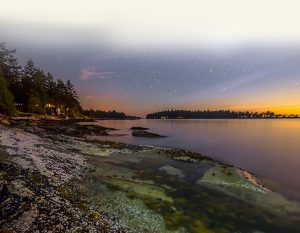
Owen Beach, located in Point Defiance Park, is a popular area for many communities in Tacoma, providing beach access for boaters, swimmers and ...
Read MoreDEC
December 14, 2020
In a typical year, we would invite the public to join us at a king tides viewing party this week to learn about the highest tides of the year, and what they can teach us about sea level rise. We all know that this is not a typical year. Instead, we invite you to learn about king tides from Bridget Trosin, WSG coastal policy specialist, in the video below.
Learn more and see the calendar of when king tides ...
Read MoreDEC
December 10, 2020

WSG awarded grants for Green Shores for Homes, Sea Level Rise Exposure, Shoreline Monitoring Toolbox, and Green Crab Projects for a total of $1.15 million.
The National Estuary Program (NEP) is a place-based initiative to protect and restore the water quality and ecological integrity of estuaries of national significance. Earlier this year, the Puget Sound NEP Habitat Strategic Initiative
Read More
DEC
December 9, 2020
Post shared from Puget Sound Partnership:
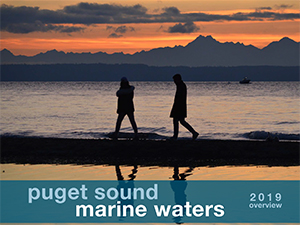
A new report details the effects of a changing climate on Puget Sound in 2019, and documents how these changes moved through the ecosystem to affect marine life and seafood consumers.
Scientists observed unusually warm water temperatures in 2019, though not as warm as during the years of “the Blob” marine heatwave of 2014-2016. Salinity was generally higher than normal throughout the Puget ...
Read MoreDEC
November 23, 2020
The MyCoast app allows you to instantly share photos of the season’s biggest tides
King tides, the annual extreme-high tides that occur whenever the moon is closest to Earth, are a dramatic feature of Washington winters – and offer a glimpse of what our future in Western Washington may look like as sea levels rise. This holiday season provides a great opportunity for people to capture these extreme tides and help scientists assemble a preview of shorelines to come. ...
Read MoreNOV
July 27, 2020
Washington Sea Grant (WSG) is excited that William Walker is part of our team this summer as an intern with the Doris Duke Conservation Scholars Program at the University of Washington.
William is a junior studying sustainability, urban planning, and a French minor at Arizona State University. He is interested in environmental justice, institutional ...
Read MoreJUL
July 20, 2020
By James Lee, Science Communications Fellow
As Washington State slowly reopens, the COVID-19 outbreak continues to impact people in nearly every line of work. Washington Sea Grant has been responding with support to communities and industries around the state. But what about the community of researchers whose ...
Read MoreJUL
July 9, 2020
IN BRIEF:
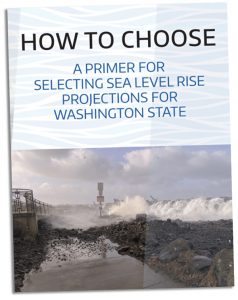
The Washington Coastal Resilience Project team – a collaboration between the state’s Department of Ecology, the University of Washington Climate Impacts Group and Washington Sea Grant – are releasing How to Choose, a guide to support the use of available sea level rise data in coastal planning and decision making.- The authors of this guide will lead a webinar on ...
JUL
June 17, 2020
Kelp absorbs carbon dioxide and other nutrients from seawater as it grows, potentially improving conditions for shellfish and other species. Can we harness this power of kelp by farming kelp and oysters together? In partnership with Washington Sea Grant, a team of leading researchers set out to find the answer to that question. Watch the video below to learn more about the project.
Learn more about Washington Sea Grant’s work in kelp aquaculture Read More
JUN
March 4, 2020
Ian Miller, coastal hazards specialist at WSG, is serving as the guest editor for the journal Water’s special issue on Coastal Hazards Management. In his guest editor message, Miller highlights the ongoing struggle of combating coastal hazards and the need for international collaboration and preparation.
Manuscript submissions are open for this special issue until November 30, 2020. Miller is especially looking for submissions focused on the link between climate change and extreme coastal hazard events, case studies exploring low-cost or traditional-knowledge-based ...
Read MoreMAR
February 20, 2020
There has been a lot of recent interest in kickstarting a seaweed industry in Washington. But is it currently possible? If you want to become a kelp farmer, where do you even start?
Earlier this month, Washington Sea Grant (WSG) hosted a Seaweed Farming Intensive Training to help aspiring seaweed farmers and entrepreneurs answer these and other questions. The first event of its kind in the state, the three-day training covered everything from local seaweed ecology, how to ...
Read MoreFEB
January 15, 2020
It is hard to comprehend the scale of damage that resulted from the 2011 Japanese tsunami. Entire forests, neighborhoods and even towns were washed away. It caused the worst nuclear accident since Chernobyl. Overall, almost 20,000 people were proclaimed dead or missing.
More than eight years after the tragedy, the city of Sendai, in Japan’s Tohoku Region, is still in recovery. As the city continues to rebuild, however, local scientists and planners aim to share the knowledge they have ...
Read MoreJAN
December 23, 2019

Seaweed has been receiving a lot of attention recently as the next sustainable superfood. Not only is it packed with micronutrients, but seaweed also absorbs carbon dioxide as it grows. This means cultivating seaweed alongside other marine species could help buffer vulnerable organisms, such as oysters, from the corrosive effects of ocean acidification.
But getting a seaweed farm ...
Read MoreDEC